What a CLM is and what it actually does
Without CLM, contract work is scattered: drafts in Word, redlines in email, signatures in a separate tool, and final copies in a folder nobody can find. With CLM, that same work lives in one system. A request captures the few details that change risk or content; the platform selects the right template and applies clause rules so the first draft is close to your policy; negotiation happens against standard language with pre-approved fallbacks; approvals follow rules instead of inbox chasing; signature is handled inside the platform; and the signed record powers obligations, renewals, search, and reporting. If these pain points sound familiar, start with Contract management challenges.
Stages of CLM (3 vs 8: how to think about them together)
There are two common ways of describing the CLM lifecycle. They cover the same journey at different levels of detail.
The 3-stage view (good for orientation)

1) Pre-signature (create and agree)
Everything before anyone signs. A request is raised (often from CRM) with the details that matter. The system selects the right template, fills basics, and applies clause rules so the first draft starts near “right.” Negotiation uses standard positions and pre-approved fallbacks. Approvals are triggered by rules (price, discount, data, jurisdiction), so the right people weigh in without email chasing. The goal is a correct agreement the business can accept quickly. For practical guidance on templates and workflows, see Contract templates and workflow automation.
2) Signature (execute)
Signing sits inside the same workflow. You prepare, send, and track every e-signature in the CLM platform, and status updates sync automatically to the contract record. When both parties sign, the system stores the final PDF together with key metadata such as signer identities, timestamps, and required fields for reporting or audit. This keeps every contract complete, traceable, and governed from start to finish.
3) Post-signature (perform and renew)
A signed contract creates work: obligations to meet, services to deliver, data to protect, invoices to issue, renewals to plan. CLM turns that into tasks with owners and dates, keeps amendment history clean, and shows what renews next quarter.
The 8-stage view (good for configuration and measurement)
The 8-stage view is a bit more detailed, covering further stages that fall within the pre-sign and post-sign categories.
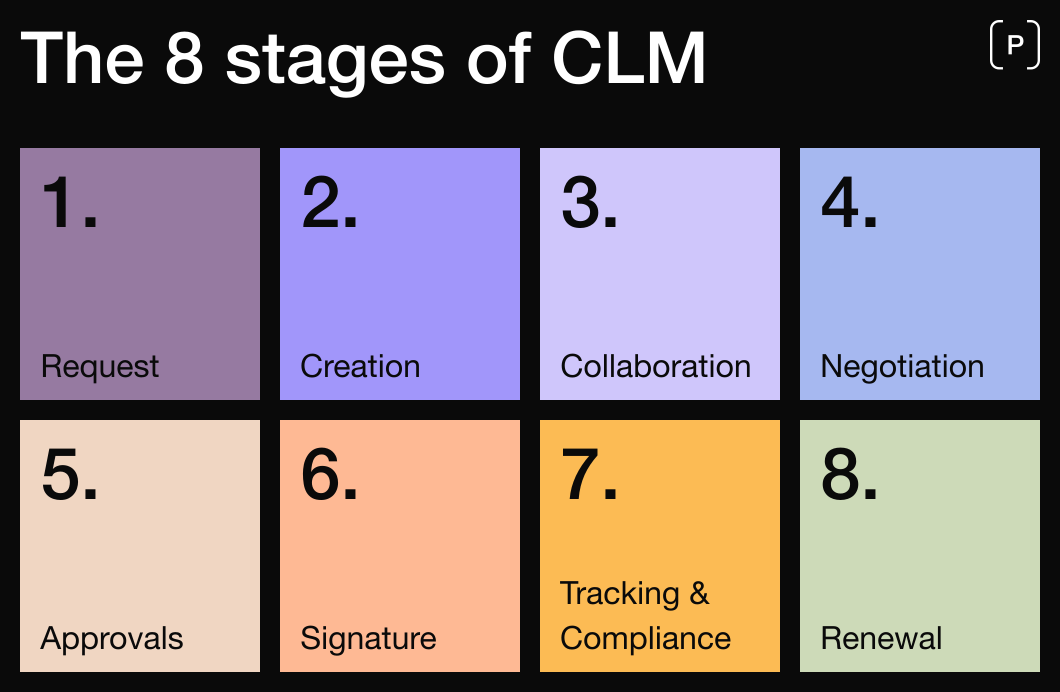
1) Contract request (initiation)
Before a contract can be created and managed, it needs to be requested. This stage captures the business context and decides which contract path to take.
Without CLM platform: Requests arrive by email or ad-hoc forms. Key details (value, data processing, jurisdiction) are missing, so Legal chases context and restarts are common.
With CLM platform: A short intake asks only for details that change risk or content (counterparty, what’s being sold/bought, values/discounts, data, governing law). Using integrations, intake can trigger from CRM so reps don’t switch tools. The inputs determine the right template and approval path.
2) Contract creation (authoring)
The first draft is produced, reflecting policy, commercial terms, and the context from intake.
Without CLM platform: Typically, a Word file is cloned; names and numbers are typed in manually; old clauses are copied forward and drift from policy.
With CLM platform: The system selects the correct template, auto-fills variables, and pulls standard wording from a clause library with one or two approved fallbacks. Non-legal teams can self-serve safely; Legal focuses on exceptions.
3) Internal review & collaboration
Stakeholders inside your company read, comment, and propose changes before anything goes to the counterparty.
Without CLM platform: Multiple versions circulate by email. Comments conflict, edits are missed, and time is lost merging documents.
With CLM platform: Everyone reviews the same record with tracked changes and comments. You can see who changed what and why; conflicts are resolved in context.
4) Approvals. Routes fire on rules you define (e.g., “>20% discount → Sales leadership,” “data processing → Security,” “non-standard law → Legal”).
4) Negotiation with the counterparty
Both sides align on terms, usually iterating on areas like liability, data, pricing, and governing law.
Without CLM platform: Redlined Word files bounce over email. Version confusion grows; concessions aren’t logged; decisions get duplicated.
With CLM platform: External redlining happens in a controlled workspace. For “pressure” clauses, reviewers pick pre-approved fallbacks instead of drafting from scratch. Every change and rationale is captured for audit and learning.
5) Approvals
Internal sign-offs confirm that risk, commercial, and compliance requirements are met before signature.
Without CLM platform: “Can you approve?” messages bury in inboxes; it’s unclear who must sign off at what threshold.
With CLM platform: Approvals are policy, not persuasion. Rules route automatically (e.g., “>20% discount → Sales leadership,” “personal data → Security,” “non-standard law → Legal”). Approvers see the context and decide in a click; status is visible to all.
For setup patterns that work, see Contract management best practices.
6) Signature (execution)
Parties formally execute the agreement and create an auditable record.
Without CLM platform: Documents are exported to a separate e-signature tool; final files are downloaded, renamed, and filed by hand; timestamps and signer info scatter across drives.
With CLM platform: E-signature is integrated. You send, track, and complete signing on the same contract record. Final PDFs, signers, and timestamps attach automatically.
7) Tracking & compliance (performance)
The signed contract generates obligations and milestones that must be met during the term.
Without CLM platform: Contracts disappear into folders; obligations live in spreadsheets (if anywhere); teams can’t answer basic “Are we on track?” questions.
With CLM platform: Obligations become tasks with owners and dates (SLAs, notices, deliverables, data duties). Dashboards show progress and risk early; reports reveal bottlenecks to fix upstream.
8) Renewal, amendment, or termination
At or before expiry, you decide to renew, change, or end the relationship and record what happens.
Without CLM platform: Renewal dates are missed; auto-renewals roll over unintentionally; amendments are standalone files with no trace to the original.
With CLM platform: The system prompts review in advance with relevant context (usage, price, issues). Amendments launch from the correct template and keep full history. If you end the contract, the record closes with retention rules applied.
How the 3-stage and 8-stage views align
- Pre-signature = Stages 1–5 (Request → Authoring → Internal review → Negotiation → Approvals)
- Signature = Stage 6 (Signature)
- Post-signature = Stages 7–8 (Tracking & compliance → Renewal/Amendment/Termination)
Use the simple 3-stage model to align non-experts on outcomes (faster time to yes; fewer missed renewals).
Use the detailed 8-stage model to assign owners, define SLAs, and measure where time and risk actually live.
Why organizations adopt CLM (the problems it actually solves)
Most teams struggle with fragmentation: one tool for drafting, another for redlines, a separate e-signature product, shared folders for storage, and spreadsheets for tracking. Work gets lost at handoffs, status is unclear, and data is scattered. CLM fixes the fragmentation by moving the work into one flow: so drafting, approvals, signature, storage, and reporting all reference the same record.
How CLM solves those problems (and which capabilities matter)
Templates and clause rules make safe first drafts the default
Your Legal team (often with Legal Ops) sets up the template catalog and clause library to reflect your real contract structure and legal requirements, e.g., MSAs, order forms, DPAs, NDAs, supplier agreements; the jurisdictions you operate in; and any product-specific terms. They define the standard position for each clause plus one or two approved fallbacks, and control who can change what via permissions and approval rules.
From there, a short intake determines which template and clauses apply. Variables auto-fill, and reviewers can switch to a Legal-approved fallback when a counterparty pushes. The result: business users can self-serve safely, while Legal stays in control of policy and focuses on true exceptions (with change history and audit intact).
(Deep dive: Contract templates and workflow automation.)
Approvals run on rules, not on persuasion
Your Legal, Finance, and Sales/Procurement Ops teams define the approval policy once, in the system, based on how your business actually makes decisions: commercial thresholds (e.g., total value, discount), risk triggers (personal data, security posture, unusual jurisdictions), and policy deviations (non-standard clauses). Each rule names an owner (e.g., Sales leadership, Security, Legal) and what evidence they need to see.
From there, approvals fire automatically when conditions are met. Approvers review the change in context **(**the exact clause, the deviation from policy, and the business impact) then approve or reject in a click. Their decisions are logged to the contract record, so you have a clean audit trail and can report on where time is spent. Because status is visible to everyone (and can sync back to CRM/ERP), end-of-quarter becomes predictable instead of a chase.
For patterns and checklists, see Contract management best practices.
E-signature is integrated, not bolted on
Legal Ops or the system admin configures signer roles, signing order, and any ID or witness requirements once (per template), so business users don’t reinvent the wheel. You prepare, send, sign, and track inside your CLM platform; reminders and status changes update the same record. When execution completes, the platform stores final PDFs, signer identities, and timestamps automatically. No exporting, renaming, or manual filing and your audit trail satisfies internal and external requirements. If your sellers live in CRM, the signature status is visible there too, so everyone stays aligned.
One contract record becomes the source of truth
Every agreement lands in one record that Legal governs: versions, the executed file, structured fields (values, dates, parties, clause selections), and full history. Access is role-based, retention rules are enforced, and integrations keep key fields in sync with CRM/ERP. Because the data is structured, search is practical: “show me every contract with a 12-month termination notice,” “everything renewing next quarter,” “all deals with a liability cap below our standard” and reporting stops being a folder hunt. This is also the record you’ll use for audits, playbook tuning, and forecasting.
Post-signature work is managed, not remembered
Post-signature, contract owners in the business (not just Legal) get accountable tasks with due dates, deliverables, SLAs, security reviews, notices, and renewals. The system sends reminders ahead of milestones, escalates when deadlines are at risk, and rolls up progress to dashboards leaders actually read. If reality changes, amendments launch from the correct template so history stays clean and policy still applies. Over time, you’ll use this operational view to improve upstream: tighten a clause that generates frequent exceptions, or simplify an approval that rarely finds issues.
Capabilities to look for as you evaluate:
- Template and clause management with approved fallbacks
- Configurable approval rules and audit trails
- Integrated e-signature
- Strong search and saved reports
- CRM/ERP integrations for intake and status sync
- Role-based permissions
- Redline compare and version history
- Obligation/renewal workflows
- Admin tools that let Legal/Ops update policy without developer help
Curious about where AI fits here (and where it doesn’t)? Start with AI in CLM: Separating value from hype for reliable use cases like metadata extraction and clause-to-policy comparison, without handing judgment over to a black box.
Benefits of CLM, by stakeholder
Sales
With CLM connected to CRM, reps generate the right agreement from the opportunity, track status, route approvals, and send for e-signature without leaving their pipeline. Templates and clause rules bake policy into the draft, so Sales doesn’t chase the “latest version,” and Legal only steps in when a rule is triggered. Leaders get a clean view of where deals slow and can forecast with fewer end-of-quarter surprises. See the deeper dive: Sales contract management.
Quick wins you can expect:
- Contracts created from templates in seconds, directly from opportunities
- Approvals based on rules (discounts, data, non-standard terms) with a clear audit trail
- Real-time signature status and automatic filing back to the same record
Practical playbook: Unblocking revenue with CLM: Sales and Legal in sync.
Legal
Policy becomes how the system behaves: templates, clause fallbacks, and approval rules reflect current positions. Routine drafting shifts to safe self-serve; Legal focuses on genuine exceptions. The audit trail is created as people work, who changed what, when, and why.
Quick wins you can expect:
- Fewer “quick draft” asks; safe self-serve for standard contracts
- Exceptions surfaced with context; faster, cleaner reviews
- Centralized clause library reduces drift and one-off language
- Complete version history and redline compare by default
- Lower risk of missed approvals or unauthorized terms
Finance
Key values, dates, and terms are structured fields (not buried in PDFs) so forecasting and revenue recognition stop relying on ad-hoc spreadsheets. Renewals and obligations are visible early, which improves cash predictability.
Quick wins you can expect:
- Reliable contract data (value, term, billing triggers) for forecasting
- Renewal pipeline visibility and owner accountability
- Faster quote-to-cash: fewer rework loops from missing terms or signatures
- Clear audit evidence for close, audits, and controls
- Saved reports you can reuse each month/quarter
Procurement
Supplier terms stay consistent, risk reviews are rule-based, and post-signature responsibilities have owners. You negotiate once, then lock in the playbook so it’s followed every time. For the buy-side lens, see Contract management in procurement.
Quick wins you can expect:
- Standard supplier positions and approved fallbacks out of the box
- Auto-approvals/escals for data, spend, or jurisdiction triggers
- Obligation and SLA tracking with alerts (not spreadsheets)
- Cleaner vendor files and faster re-sourcing decisions
- Less cycle time lost to version hunts and email threads
Leadership
You get line of sight across the lifecycle: cycle time, non-standard terms, approval load, and renewal risk so policy changes are driven by data, not anecdotes.
Quick wins you can expect:
- A simple dashboard: where time is lost, by stage/team/segment
- Early warning on renewal exposure and contractual risk
- Evidence to tune policy (tighten or relax) with confidence
- Consistent governance: roles, SSO, retention, and audit trails
- Fewer “fire drill” escalations at quarter end
For security-conscious programs, keep the Contract management security guide close.
What to consider when choosing CLM software
- Start with your reality: volumes, contract types, who touches them, and where work slows. Then judge vendors on fit to your motion.
- Will intake live where users already work (often CRM)?
- Can Legal maintain templates, clauses, and approvals without custom code?
- Are approvals rule-based with clear histories?
- Is e-signature integrated so the record stays intact?
- Can you search by clause, field, or date and build reports leaders will use?
- Do connectors keep status and key fields in sync with CRM/ERP?
- Finally, confirm roles, SSO, retention, and export controls match your security posture.
A feature checklist matters, but fit to process matters more. For a general patterns overview, see Contract management best practices.
Clear distinctions to prevent confusion
CLM vs e-signature.
E-signature handles the moment of signing. In a modern CLM platform, that capability is integrated, so preparation, sending, signing, and tracking happen on the same record. No exports, no lost status.
CLM vs a repository.
A repository stores documents. CLM manages how those documents are created and approved, then keeps renewals and obligations on track after signature.
CLM vs “templates in Word.”
Templates alone don’t route approvals, enforce clause rules, update CRM, or manage renewals. CLM connects the whole flow so the process is reliable end to end.
How to implement contract lifecycle management
Begin by mapping reality: how a contract actually moves today, from request to renewal. Note where approvals stall, versions fork, and data goes missing. Capture two baselines: median cycle time and template adoption (the share of agreements generated from standard templates).
Bring Sales, Legal, Finance, and Procurement into the same plan and agree on two or three outcomes you’ll measure. Choose a first scope that ships in weeks (new sales agreements in one region is a common win).
Standardize before you configure: maintain a template catalog; define standard positions and one or two fallbacks for pressure clauses; write approval rules that mirror how decisions are really made.
Select a platform that fits your stack (CRM and e-signature integration, search/reporting, role-based access), then pilot with real work and task-based training (“draft, approve, sign, find”).
Fix bottlenecks weekly, publish results against your baseline, and expand by slice; renewals next, then a second region or a procurement flow. If you’re rolling out in software or subscription businesses, the SaaS contract management guide has scope ideas and common terms to address.