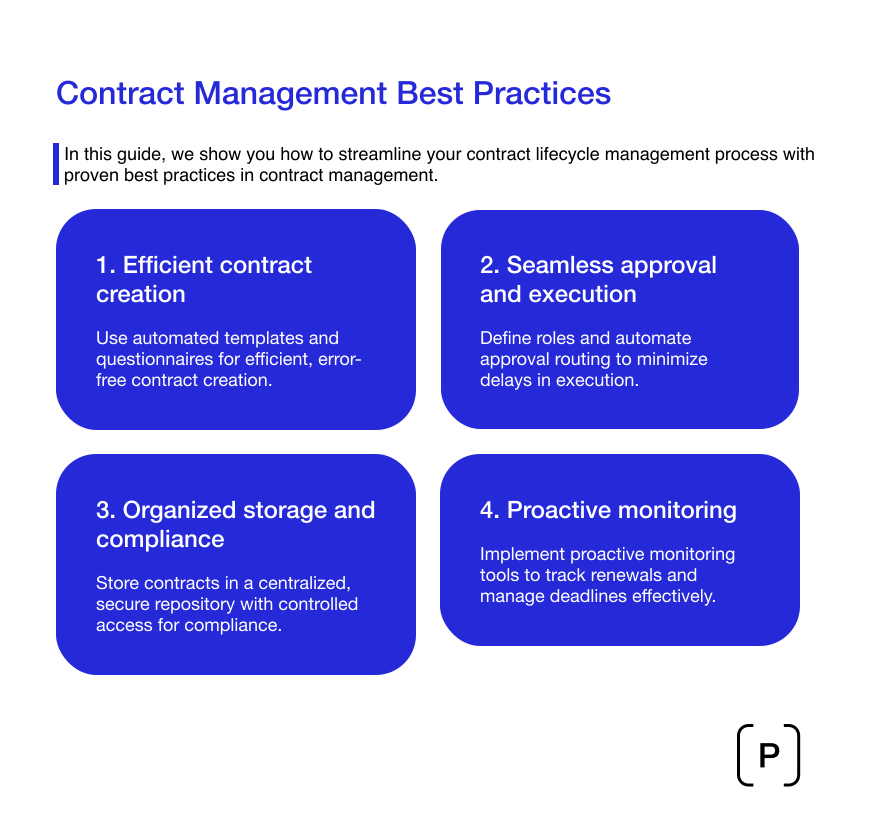
Streamline your contract lifecycle management process with these proven best practices in contract management.
Mastering contract management best practices is essential for any organization aiming to minimize risks, optimize processes, and improve control over contract operations. In this guide, we explore practical approaches for each phase of the contract lifecycle and how organizations can work more efficiently, reduce costs, and strengthen compliance.
In practice, many of these best practices are supported by contract management software, which is designed to help structure workflows, support automation, and improve visibility across the contract lifecycle.
Implementing contract management best practices
Implementing contract management best practices can improve efficiency and control throughout the contract lifecycle. Key strategies include:
Efficient contract creation: Use standardized templates and structured inputs to reduce errors and save time
Seamless approval and execution: Define clear roles and use structured workflows to reduce delays
Organized storage and compliance: Maintain a centralized and searchable contract repository
Proactive monitoring: Track key dates and obligations to avoid missed renewals or compliance risks
Many organizations use contract management software to support these practices, helping teams manage contracts in a more consistent and scalable way.
Key contract management best practices
Effective contract management best practices rely on understanding the full contract lifecycle. From creation to renewal, these practices help create more consistent and controlled processes.
1. Efficient contract creation: Reduce errors and save time
The contract creation phase often presents bottlenecks. A key best practice is to streamline drafting by using standardized processes and tools.
Many organizations use contract management software to support contract creation, enabling more consistent drafting and reducing reliance on manual processes. This often includes the use of contract templates and structured workflows.
This can include:
Standardized contract templates: Pre-approved templates help reduce errors and ensure consistency
Structured data input: Guided questionnaires can help capture key contract details such as counterparty, jurisdiction, and commercial terms
Controlled clause usage: Standard clauses and fallback options help maintain alignment with internal policies
These approaches are often part of contract automation, where repetitive steps in drafting can be handled more efficiently.
2. Seamless approval and execution: Reduce delays
The approval and execution phases often experience delays due to unclear responsibilities and fragmented communication.
To improve this:
Define clear roles: Ensure that each contract type has clearly assigned approvers
Use structured approval workflows: Route contracts to the right stakeholders based on defined rules
Improve visibility: Ensure all stakeholders can see status and progress
Contract management software can support this by routing approvals and helping teams maintain visibility into where contracts are in the process.
To support execution:
Use integrated e-signature solutions: These can help reduce the time required to finalize agreements
Track signing status: Ensure all parties are aligned throughout the execution phase
3. Organized storage and compliance: Improve access and control
A core principle of contract management best practices is centralized storage. Scattered or poorly stored contracts can lead to inefficiencies and compliance risks.
Instead, organizations should aim to:
Maintain a centralized contract repository: A structured and searchable archive makes it easier to find and manage contracts
Apply permission-based access: Control who can view and edit contracts
Ensure traceability: Maintain clear records of contract versions and changes
Contract management software is often used to support centralized storage, helping teams manage contracts in a more structured and compliant way. You can explore this further in contract archiving systems.
4. Proactive monitoring: Stay ahead of key dates
Staying on top of contract deadlines is critical for avoiding missed renewals and managing risk.
Best practices include:
Tracking key dates: Monitor renewals, terminations, and obligations
Setting up reminders: Use alerts to stay ahead of important milestones
Reviewing auto-renewals: Regularly assess whether contracts still meet business needs
Contract management software can help support this by providing automated reminders and better visibility into contract timelines.
Summary of best practices in contract management
In summary, effective contract management relies on a combination of structured processes and the right tools.
Key takeaways include:
Standardized contract creation: Use templates and structured inputs to improve consistency
Clear approval workflows: Define roles and establish structured approval paths
Centralized storage: Maintain a secure and searchable contract repository
Active monitoring: Track milestones and manage renewals proactively
Many organizations support these practices with contract management software, helping them improve efficiency, reduce risk, and gain better control over their contract processes.
Lorem ipsum dolor sit amet, consectetur adipiscing elit, sed do eiusmod tempor incididunt ut labore et dolore magna aliqua. Ut enim ad minim veniam, quis nostrud exercitation ullamco laboris nisi ut aliquip ex ea commodo consequat. Duis aute irure dolor in reprehenderit in voluptate velit esse cillum dolore eu fugiat nulla pariatur.