What is contract management?
At its core, contract management is the process of overseeing the entire lifecycle of a contract. From drafting agreements to tracking performance and ensuring timely renewals, effective contract management ensures compliance, reduces risks, and maximizes value.
Without structured processes or software support, contract management often becomes fragmented, with documents spread across email, shared drives, and disconnected tools. This makes it difficult to maintain visibility, enforce compliance, and scale operations.
This is where contract management software becomes essential, enabling organizations to centralize contracts and manage them in a structured and scalable way. Businesses need to understand what contract management is to handle agreements effectively and achieve optimized outcomes.
How contract management works in practice
In most organizations, contract management involves multiple stakeholders across Legal, Sales, Finance, and Procurement. Each contract moves through a series of steps, often with handoffs between teams.
Without contract management software, this process is typically manual and fragmented. With software, it becomes structured, automated, and traceable.
Key steps in contract management:
1. Contract creation and negotiation
Crafting clear, legally sound agreements that align with all parties’ goals.
With contract management software, contracts can be generated from pre-approved templates, ensuring consistency and reducing drafting time.
This is a core part of contract automation, where templates and workflows reduce manual effort and improve speed.
2. Execution
Ensuring agreements are finalized with secure and compliant approvals and signatures.
Modern contract management tools integrate e-signature functionality directly into the workflow, eliminating the need for separate tools.
3. Performance monitoring and compliance
Tracking obligations and ensuring adherence to contractual terms.
Software enables real-time visibility into obligations, deadlines, and compliance status.
4. Risk management
Proactively identifying and mitigating potential issues.
Standardized templates, approval rules, and audit trails reduce the risk of non-compliant agreements.
Structured workflows also improve contract review and redlining by ensuring all changes are tracked, visible, and controlled.
5. Renewal and termination
Managing key dates, amendments, and closures to maximize efficiency.
Automated alerts and lifecycle tracking help prevent missed renewals and unintended contract extensions.
What is contract management software?
To give a simple answer to the question, ‘What is contract management software?’: it is a digital system designed to manage contracts across their entire lifecycle, replacing manual processes with automated workflows and centralized data.
Instead of relying on emails, spreadsheets, and disconnected tools, contract management software provides a single source of truth for all contract-related activities. By using contract management software, organizations can reduce manual work, improve collaboration, and gain full visibility into contract data.
This enables organizations to:
- Automate contract creation and approval workflows
- Collaborate on contract review and redlining in real time
- Track contract status, obligations, and performance
- Maintain full visibility and control over contract data
Core features of a contract management software
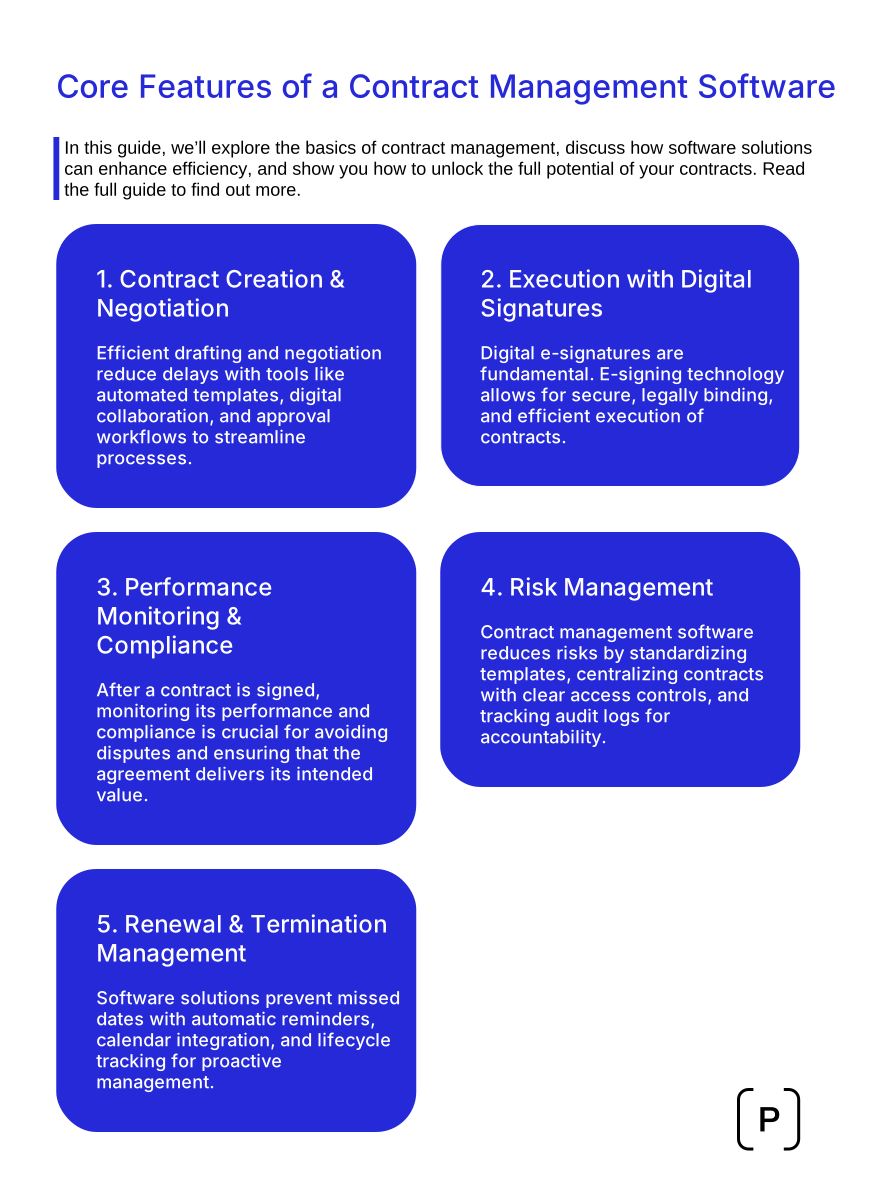
1. Contract creation and negotiation
Efficient drafting and negotiation are vital for reducing delays. Digital contracting tools offer:
· Automated templates for common contracts.
· Digital collaboration forseamless edits and negotiations.
· Approval workflows to alert team members at the right time.
These capabilities are a key part of contract automation, reducing manual effort and ensuring consistency across agreements.
2. Execution with digital signatures
When considering what is contract management software, digital e-signatures are fundamental. E-signing technology allows for secure, legally binding, and efficient execution of contracts. Contract management software can provide:
- Multiple e-signature providers and verification methods for flexibility.
- Notifications when contracts are signed to keep everyone informed.
- Enhanced transparency and legality through use of audit trails.
3. Performance monitoring and compliance
After a contract is signed, monitoring its performance and compliance is crucial for avoiding disputes and ensuring that the agreement delivers its intended value. Businesses exploring what is contract management will find that software simplifies this process by offering:
- Metadata tagging and intuitive search filters in a centralized archive to quickly identify key contract components and locate crucial data quickly.
- Reporting capabilities to assist with efficient data analysis.
- Alerts for important dates and any actions that must be taken.
4. Risk management
Contract management software helps to mitigate any contract-related risks by:
- Standardizing templates and clauses to minimize errors.
- Centralizing contracts in a digital archive and having clear visibility of the access structure.
- Tracking audit logs to maintain accountability.
By structuring contract review and approval processes, software also reduces risks associated with contract redlining and inconsistent edits.
5. Renewal and termination management
Software solutions can keep you from missing key dates with features like:
- Automatic reminders for renewals, renegotiations, or terminations.
- Calendar integration for proactive planning.
- Lifecycle tracking to ensure timely actions.
What is contract automation?
Contract automation refers to the use of software to automate key steps in the contract lifecycle, including drafting, approvals, negotiation, and execution.
Instead of manually managing each step, organizations can use contract automation to:
- Generate contracts from templates
- Automate approval workflows
- Manage contract review and redlining efficiently
- Reduce time-to-signature and improve deal velocity
Contract automation is a core capability within contract management software and one of the main drivers behind its adoption.
Benefits of contract management software
If you’re still wondering what is contract management software, consider these key benefits:
- Time savings: Automate repetitive tasks and reduce administrative work
- Risk reduction: Minimize errors and ensure compliance
- Scalability: Manage increasing contract volumes efficiently
- Improved visibility: Gain full control over contract data and status
- Faster execution: Reduce delays in approvals, negotiations, and signing
How to choose contract management software
Choosing the right contract management software depends on your organization’s workflows, contract volume, and complexity.
Key factors to consider include:
- Automation capabilities (drafting, approvals, workflows)
- Ease of use across teams
- Integration with CRM and ERP systems
- Scalability and flexibility
- Security and compliance requirements
Organizations that invest in the right contract management software can significantly improve efficiency, reduce risk, and accelerate business outcomes.
Contract management vs. Contract Lifecycle Management (CLM)
Contract management focuses on managing agreements effectively, while Contract Lifecycle Management (CLM) represents a broader, system-driven approach that manages the entire lifecycle end to end.
For a deeper understanding of CLM, read our guide: Contract Lifecycle Management (CLM): A Practical Guide.
FAQ: Contract Management and Contract Management Software
What is contract management software?
Contract management software is a digital system that helps organizations manage contracts across their entire lifecycle using automation, centralized data, and structured workflows.
How does contract management software improve efficiency?
It reduces manual work by automating drafting, approvals, and tracking, while improving visibility and collaboration across teams.
What is contract automation?
Contract automation is the use of software to automate key contract processes such as creation, approvals, and execution, improving speed and consistency.
What is contract review and redlining?
Contract review and redlining is the process of editing and negotiating contract terms. Software enables structured collaboration, version control, and full visibility into changes.
What is the difference between contract management and CLM?
Contract management focuses on handling contracts effectively, while CLM is a broader approach that manages the entire lifecycle end to end.
Conclusion
Understanding what contract management is is essential for any organization that relies on agreements to operate and grow. As contract volumes increase, contract management software becomes critical for reducing manual work, improving contract review and redlining, strengthening control, and enabling scalable growth. Organizations that invest in structured contract management processes and the right software are better positioned to reduce risk, improve efficiency, and accelerate business outcomes.